
Limited-Time Offer: Done-for-you setup — $1,497 one-time
| ..All plans include AI-powered tools
| ..30-day guarantee
The AI-Powered Platform for Law Firms
Your Firm.
Running on Autopilot.
Around the Clock.
Digital Overtone gives your firm an AI-powered team that answers calls, responds to messages on every platform, books consultations, and follows up with leads — automatically, 24/7, without adding headcount.
Done-for-you setup
AI included
Live in days
Live in days
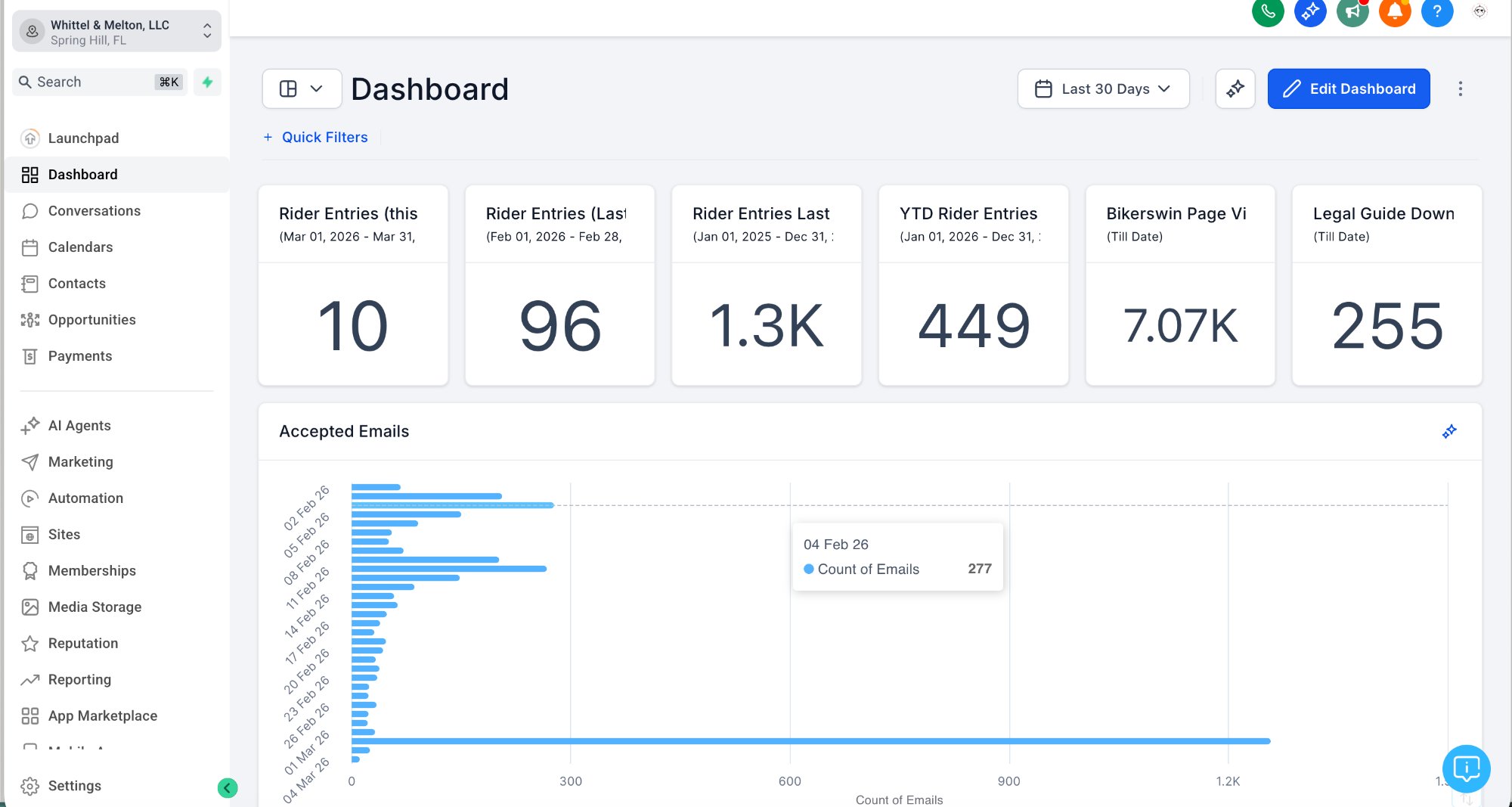
New Consultation Booked — Sarah M.
AI captured & scheduled while you were in court
97%
Of texts read within 3 minutes of receipt
62%
Of callers who get voicemail never call back
5×
More likely to convert if you respond in 5 min
24/7
AI answers, qualifies, and books around the clock
The $15,000 Problem
She Called. You Were in Deposition. She Hired Someone Else.
Sarah was injured in a motorcycle accident on a Tuesday afternoon. She grabbed her phone and called the first injury attorney she found. Your line rang — but you were in the middle of a deposition. No answer. No callback. No text.
Sarah scrolled down and called the next firm. They picked up. That case — worth $15,000 in fees — was gone before you even knew it existed.
"The attorneys who win aren't always the best in the courtroom. They're the ones who respond first."
Digital Overtone permanently solves this. The instant your line goes unanswered, our AI texts Sarah back within seconds, keeps the conversation going in a natural, professional way, and books her consultation on your calendar — while you're still in that deposition.
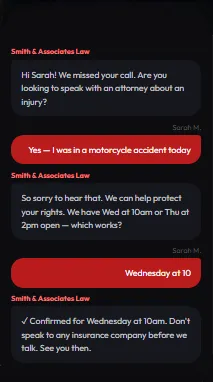
AI responded automatically — you were in deposition
Built-In AI That Works For You 24/7
Your Firm Now Has an AI Employee That Never Sleeps, Never Misses a Message, and Never Forgets to Follow Up
Digital Overtone is powered by GoHighLevel's enterprise AI suite — the same technology used by thousands of agencies nationwide. For attorneys, it means more clients captured with less staff effort.

Voice AI — Your 24/7 Phone Receptionist
When you can't pick up, Voice AI answers, qualifies the caller, collects their details, and books their consultation automatically. It speaks naturally, sounds professional, and works nights, weekends, and holidays without complaint.

Conversation AI — Intelligent Chat on Every Channel
Engage website visitors, Facebook messages, Instagram DMs, and SMS conversations with AI that understands context, handles objections naturally, and knows exactly when to transfer to a human. It pre-qualifies leads and books appointments directly in the chat flow.

Workflow AI — Smarter Automation That Thinks
Add AI decision-making directly into your follow-up sequences. The system interprets prospect intent, analyzes message tone, and takes dynamic action — routing hot leads differently from cold ones, adjusting timing, and personalizing outreach automatically.

Content AI — Campaigns Written in Seconds
Generate on-brand emails, social posts, nurture sequences, and ad copy in moments. Train the AI on your firm's voice once — and every piece of content it produces sounds like you, not a generic chatbot.

AI Review Responder — Protect Your Reputation
Automatically respond to every Google review in your firm's voice — positive or negative. Stay on top of your online reputation without spending hours writing individual replies. More reviews, better rankings, more trust.

AI Send-Time Optimization
Stop guessing when to send emails. The AI analyzes each contact's past behavior and automatically sends at the exact time they're most likely to open and respond — maximizing every campaign you run.
AI that works while you're in the courtroom.
Every Digital Overtone plan comes with AI tools built in and configured by our team during your onboarding session — no technical setup required on your end.
The Feature Attorneys Call a Game-Changer
One Inbox. Every Platform. Any Device. Your Entire Team.
Right now, your clients are texting you, emailing you, DMing you on Facebook, messaging you on Instagram, and leaving Google reviews — and those conversations are scattered across 7 different apps and 3 different logins. You're losing clients you don't even know about.
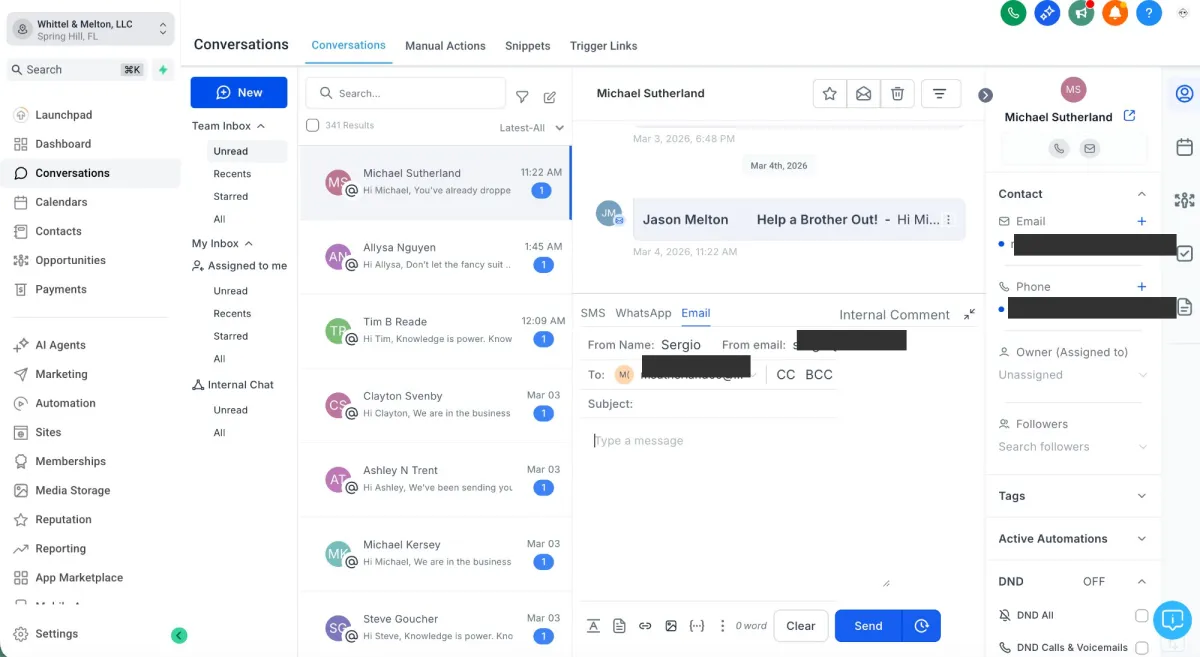
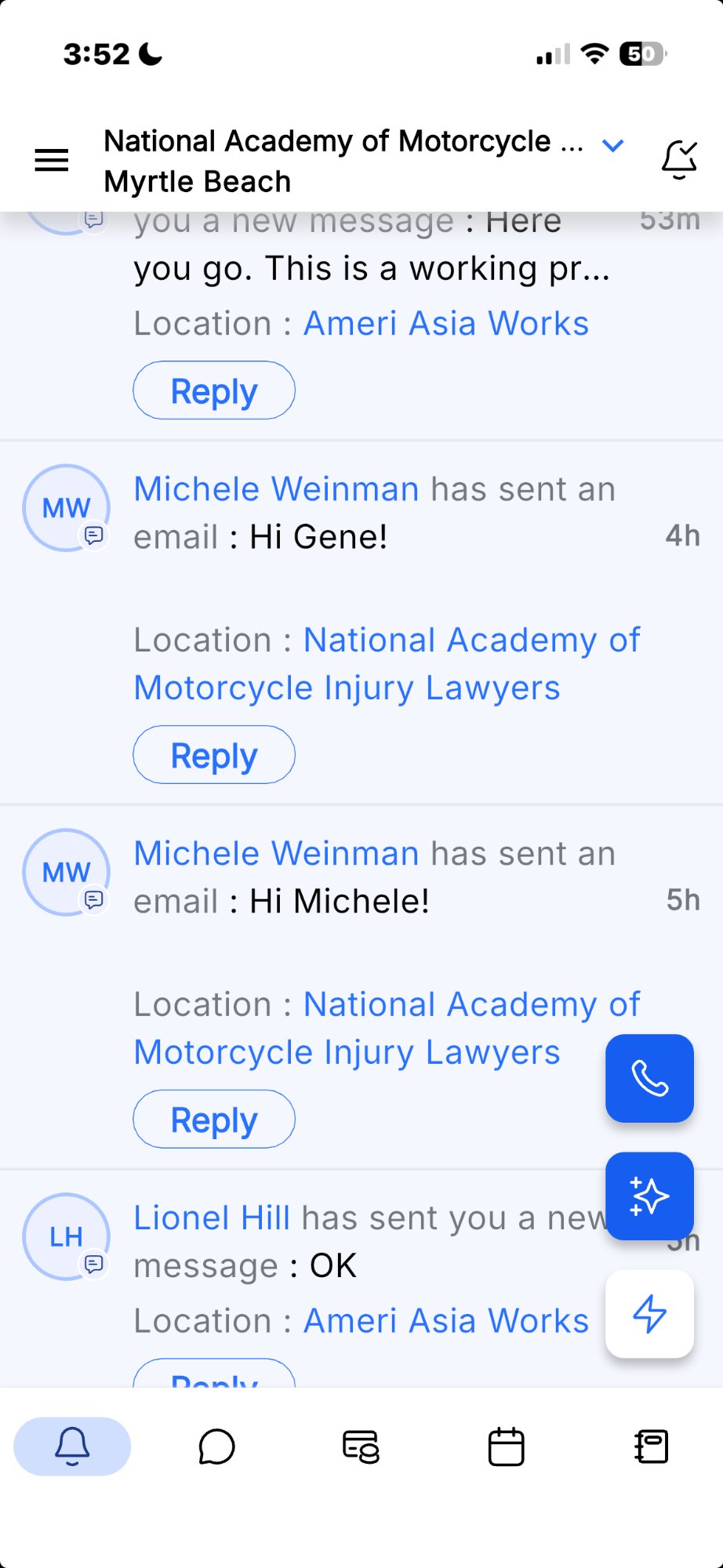
Every Channel. One Screen.
Your Team Responds from One Place — from Any Phone, Anywhere in the World
The Digital Overtone mobile app puts your entire firm's communications in the palm of your hand. Every message, every platform, every team member — all synchronized in real time.
SMS & Text
Phone Calls
Assign conversations to specific team members. See a contact's full history — every text, email, and DM — before you respond. Mark threads as resolved. Works on any device, in any browser, or via the mobile app.
"Imagine your receptionist, your social media manager, and your follow-up team all working from the exact same screen. That's what Digital Overtone's inbox gives your firm."
— The power of one unified communication hub
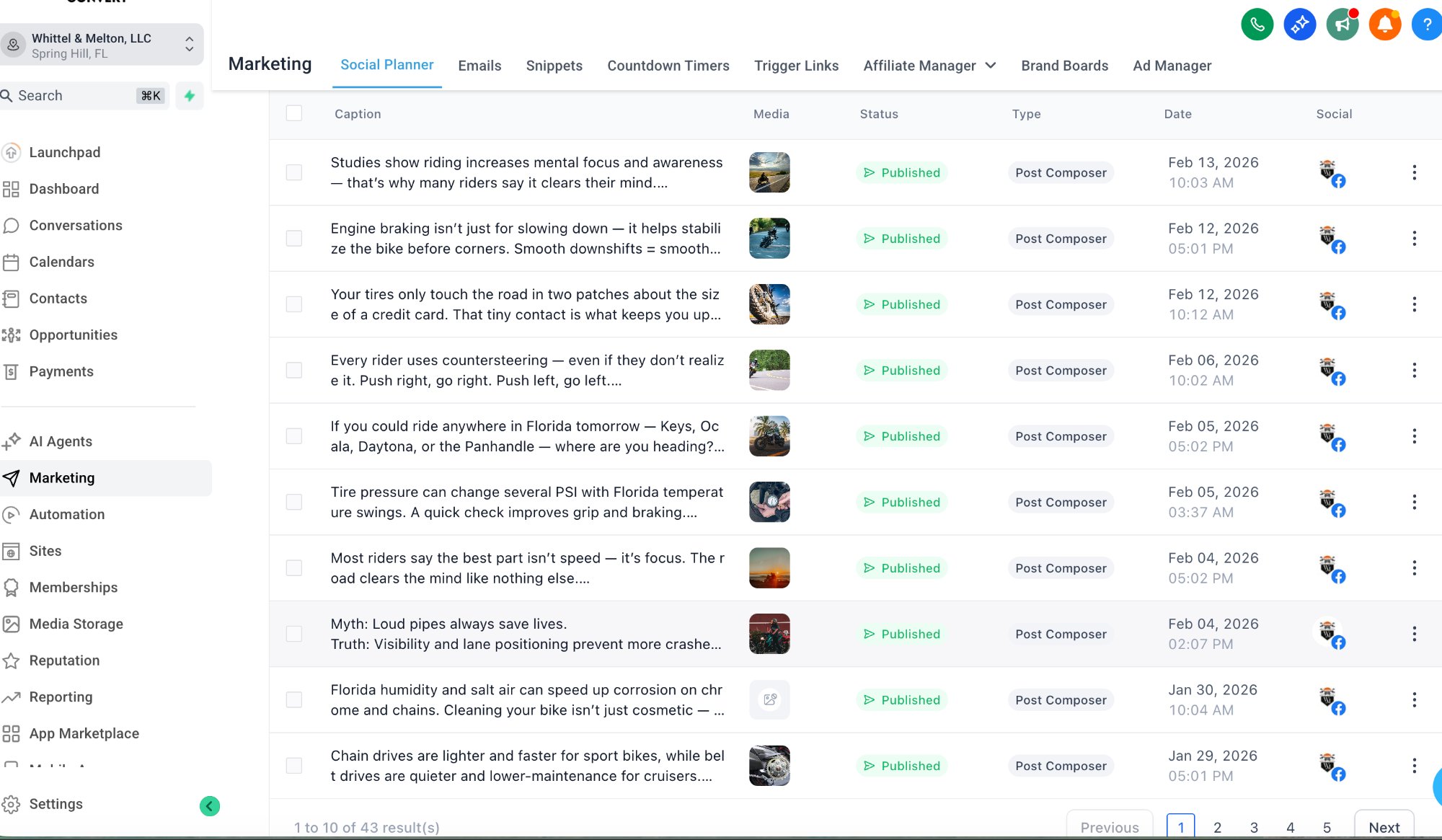
Stay Visible Between Referrals
Schedule a Full Month of Social Content in One Afternoon
The attorneys who win consistently aren't just skilled in the courtroom — they're the most visible ones online. Digital Overtone's Social Planner lets you stay in front of potential clients week after week without spending hours on social media.
Batch-schedule weeks of posts across Facebook and Instagram in a single session
Attach images, captions, and links in one streamlined workflow
Preview every post before it goes live — no surprises, no mistakes
Track published, scheduled, and failed posts in one clean dashboard
AI Content tool helps write posts in your firm's voice instantly
Set It and Forget It
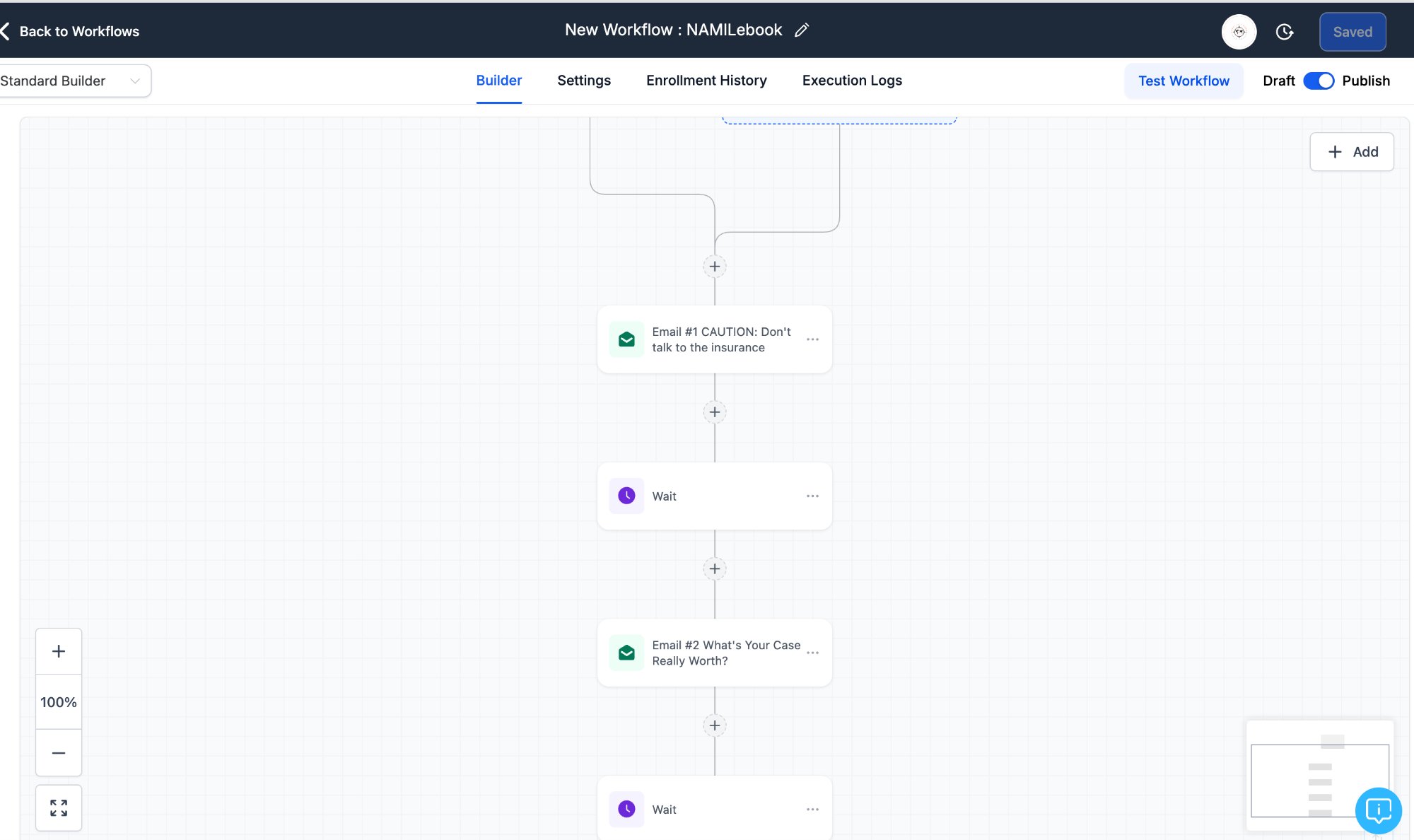
Automated Nurture Sequences That Run 24/7 Without Your Staff Lifting a Finger
Build your client education and follow-up workflow once — and let the platform run it forever. From the moment a lead opts in, Digital Overtone sends a precisely timed sequence of emails and texts that educate, build trust, and move them toward booking.
Trigger sequences automatically — missed call, form submission, website visit, opt-in
Day 1 email: "Don't speak to the insurance company before talking to us" — sent automatically
Workflow AI adds intelligent decision-making — routing based on prospect intent and behavior
Full execution logs — see exactly what was sent to whom and when
Pre-built attorney nurture sequences included — go live faster
The Hidden Cost Most Attorneys Don't See
You're Already Paying for Everything Digital Overtone Does — Just to Five Different Companies
Most attorneys running a growing firm are quietly spending $800–$1,500/month on a patchwork of tools that barely talk to each other. Here's what the math actually looks like.
What Most Attorneys Pay Today
The Duct-Tape Stack
Clio Grow — Legal CRM
Client intake, lead tracking, contact management
$99–$159/mo
Mailchimp or ActiveCampaign — Email Marketing
Email campaigns, newsletters, drip sequences
$99–$149/mo
Calendly — Appointment Scheduling
Online booking, calendar sync, reminders
$16–$20/mo
DocuSign or HelloSign — E-Signatures
Retainer agreements, engagement letters, forms
$25–$45/mo
Buffer or Hootsuite — Social Media
Scheduling posts across Facebook, Instagram
$18–$99/mo
Birdeye or Podium — Review Management
Google reviews, reputation monitoring, responses
$200–$300/mo
Zapier — Connecting All These Tools Together
Automating the gaps between platforms
$49–$69/mo
AI Answering Service or After-Hours VA
Covering calls, qualifying leads after hours
$200–$500/mo
WordPress + Landing Page Plugin
Website hosting, practice-area landing pages
$50–$100/mo
Time Lost Switching Between 8+ Apps
Staff hours, tech support, sync errors, dropped balls
Priceless
Total Monthly Cost
$756–$1,441/mo
What You Pay With Digital Overtone
One Platform. Done.
CRM & Lead Pipeline — Built In
Email Marketing & Automation — Built In
Appointment Booking & Calendar — Built In
Document Sending & E-Signatures — Built In
Social Media Planner — Built In
Reputation & Review Manager — Built In
All Automation (No Zapier needed) — Built In
Voice AI Receptionist (24/7) — Built In
Website & Funnel Builder — Built In
Invoices & Payment Collection — Built In
Total Monthly Cost
$197–$697/mo
You Could Save
$500–$1,200/month
That's $6,000–$14,400 back in your pocket every year
Stop paying premium prices for tools that don't talk to each other. One platform. One login. One monthly fee. And the savings alone could pay for your entire subscription.
Everything Included
One Platform Replaces Every Tool You're Paying For
No more duct-taping five apps together. Digital Overtone delivers the complete stack — CRM, AI, communications, marketing, billing — under one login.
🎙Voice AI Receptionist
Answers calls 24/7, qualifies leads, books appointments automatically when you're unavailable.
💬 Missed Call Text-Back
Every unanswered call triggers an instant professional text before your prospect considers another firm.
🤖 Conversation AI
AI chat agent on your website, SMS, Facebook, and Instagram — pre-qualifies leads and books calls automatically.
📅 Appointment Booking
Prospects book their own consultation 24/7 — synced directly to your calendar, zero manual effort.
📱 Mobile App Inbox
Full communication hub in your pocket. Reply to any message on any platform from anywhere.
👥 CRM & Pipeline
Track every lead from first contact to signed retainer. Custom stages, notes, and full contact history.
🌐 Website & Funnel Builder
Build unlimited practice-area landing pages — no developer, no extra cost.
⚙ Workflow Automation
Build drip sequences for follow-up, education, appointment reminders — runs 100% automatically.
📷 Social Media Planner
Schedule months of Facebook and Instagram content in one session. Stay visible between referrals.
📋 Content AI
Generate on-brand emails, social posts, and campaigns in seconds — trained on your firm's voice.
⚡ AI Send-Time Optimizer
I analyzes each contact's behavior and sends emails at the exact moment they're most likely to open.
📊 Advanced Analytics
Know exactly which campaigns are bringing in cases. Sales attribution connects every dollar to its source.
🖉 Blog Builder
Publish unlimited SEO content to establish your firm as the go-to authority in your practice area.
🌟 AI Review Manager
Automatically request and respond to Google reviews. Better reputation, higher search rankings.
💳 Invoices & Payments
Send retainer invoices and collect payments directly — no separate billing software needed.
📢 Email Marketing Builder
Advanced drag-and-drop email builder with unlimited templates, automation triggers, and analytics.
Every plan includes a personal done-for-you setup & onboarding session — our team builds, configures, and customizes everything for your firm. You show up to a working platform.
Simple Pricing
One Plan. Every Feature. Zero Compromises.
Everything Digital Overtone has to offer — AI, unified inbox, automations, social planner, CRM, and more — in one clean package. Built for attorneys who are serious about growth.
Digital Overtone — Professional Plan
One-Time Done-for-You Setup
We build your entire platform, configure all AI tools,
connect every channel, and have you live in days.
$1,497
one-time
Then Monthly
$497/mo
Normally $797/mo
14-Day Free Trial Included
Not happy within 14 days? Full refund on your setup fee — no questions asked.
Everything Included
Voice AI Receptionist (24/7)
Missed Call Text-Back
Unified Inbox — All Channels
Mobile App Access
Conversation AI (Web, SMS, Social)
Workflow AI & Automations
Appointment Booking & Calendar
CRM & Sales Pipeline
Social Media Planner
Email Marketing Builder
Website & Funnel Builder
Blog Builder (Unlimited SEO)
AI Review Responder
AI Send-Time Optimizer
Invoices & Payments
Advanced Reporting & Attribution
Ready to Get Started?
Pay your setup fee and start your free trial — we'll send you a link to book your onboarding call right after. Not ready yet? Book a free discovery call and we'll answer all your questions.
14-day free trial • Cancel anytime • No long-term contracts
Setup fee fully refunded if you're not satisfied within 14 days
30-Day Money-Back Guarantee
Get your platform live, your AI running, and your inbox unified. If within 14 days you're not completely satisfied, we'll refund your setup fee in full — no questions, no hassle. We stand behind this completely.
Your Next Client Is Looking for an Attorney Right Now.
Choose your plan, pay your setup fee, and we'll have your AI-powered platform live in days — not weeks. Still have questions? Book a free discovery call and we'll walk you through everything.
Still undecided? Book a free discovery call →
$1,497 setup • 14-day free trial • No long-term contracts • AI included
Powered by GoHighLevel • AI-Enabled Platform
© 2026 Digital Overtone. All rights reserved.
Results may vary. Digital Overtone is an independent white-label platform.
Digital Overtone — The AI-Powered Client Communication Platform for Law Firms
Not sure yet? Let's talk through it.
Free 20-min call • No pressure • All your questions answered